.png)
What is Compression Therapy?
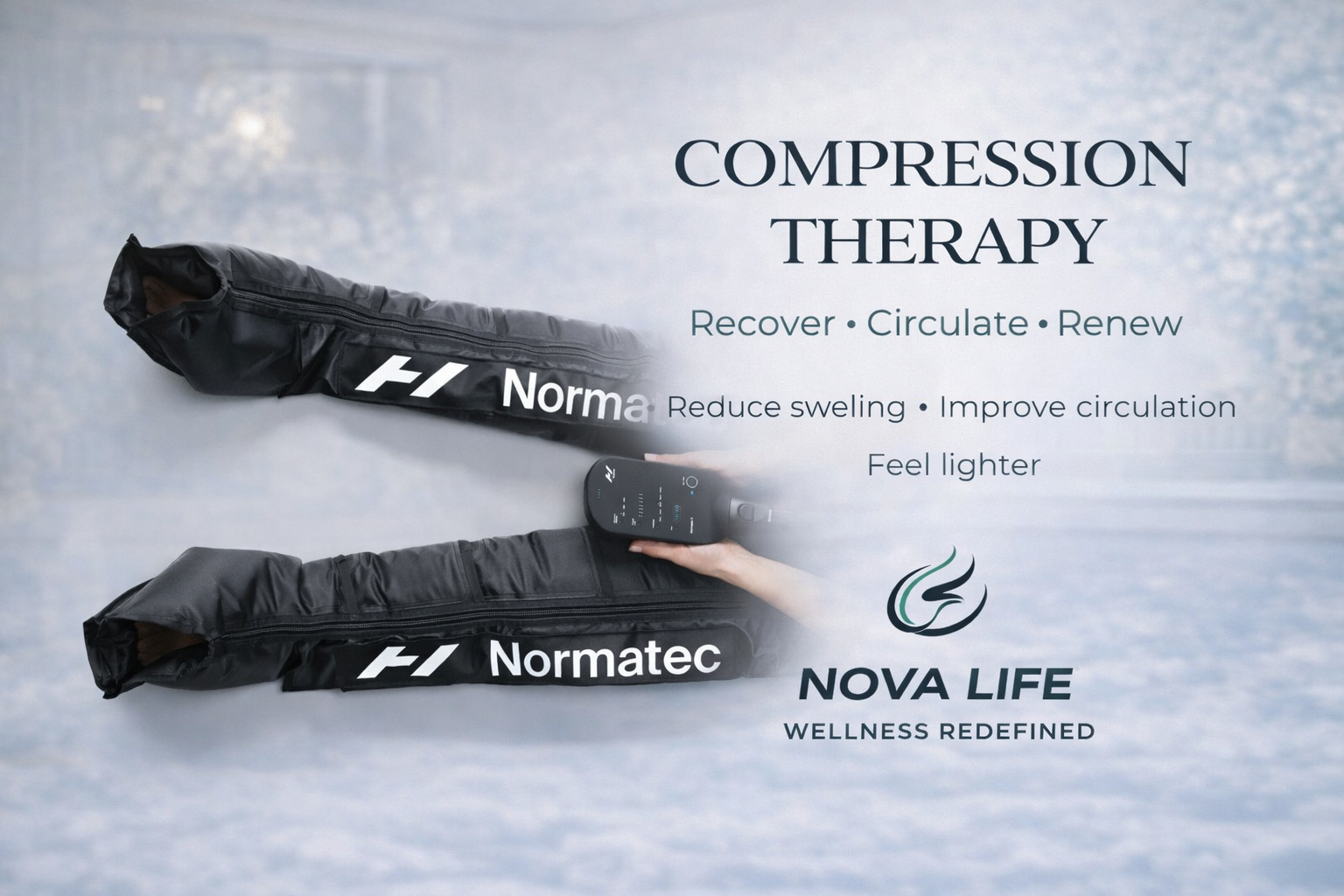
Compression therapy is a non-invasive treatment that uses controlled, rhythmic air pressure to support circulation and muscle recovery. Specialized compression sleeves gently inflate and deflate to encourage healthy blood flow and help move metabolic byproducts through the body more efficiently. Sessions are comfortable, relaxing, and designed to support recovery — whether after intense activity or everyday physical strain.
Benefits of Compression Therapy
Circulation Support
Helps promote healthy blood flow throughout the lower body.
Swelling Reduction
Supports lymphatic drainage to help reduce swelling and fluid buildup.
Muscle Recovery
Encourages faster recovery and helps reduce post-workout soreness (DOMS).
Leg Relief
Eases lower-body tension, heaviness, and fatigue.
Lymphatic Support
Helps stimulate the lymphatic system for improved fluid movement.
Physical Comfort
Promotes overall comfort so your legs feel lighter and more refreshed.
What is compression therapy used for?
Compression therapy is commonly used to support muscle recovery, reduce soreness, and improve circulation. While it’s popular among athletes, it’s equally beneficial for anyone experiencing muscle fatigue, prolonged standing, travel-related swelling, or general lower-body tension.
Many clients incorporate compression therapy into their routine to maintain comfort and support recovery after physical activity.
What does a compression therapy session feel like?
During your session, compression sleeves are placed around the legs (or targeted areas), where they gently inflate and deflate in a rhythmic pattern.
Most clients describe the sensation as a firm but comfortable massage-like pressure. The experience is relaxing, and many people use the session to rest and unwind.
How long should a compression therapy session last?
Sessions typically last 20–30 minutes, depending on your goals and comfort level.
Even shorter sessions can help stimulate circulation and ease muscle stiffness. Your provider can adjust the intensity and duration to best support your individual needs.
Read about the evidence-based science behind Compression Therapy.